
Scammers aim rental scams at renters with bad credit because a denied renter is tired, short on time, and short on money. They write ads promising what that renter wants to hear: “no credit check,” “guaranteed approval,” “move in today.” Then they ask for money first.
We hear “Is this a scam?” on the first call from many renters, and it’s a fair question. An Austin apartment locator should answer it with facts you can check. Here are those facts, plus the signs to watch for with anyone, including us.
The FTC’s December 2025 analysis counted nearly 65,000 rental scam reports from January 2020 through June 2025, with about $65 million in reported losses. The median loss was $1,000. In the 12 months ending June 2025, about half of reports started with a fake Facebook ad, and 16% started on Craigslist.
Our rule, stated once
We never charge the renter or ask for money to hold a unit. The apartment community pays us after the lease is signed.
The warning signs
The most reliable sign is a request for money before you have seen a lease or toured a unit. The Federal Trade Commission lists the patterns behind rental listing scams. These are the ones aimed at second-chance renters.
| Warning sign | What it sounds like | Why it is a red flag |
|---|---|---|
| Pay to hold | “Send a deposit today to hold it before someone else does.” | Money before a lease or a tour |
| Guaranteed approval | “Bad credit, eviction, anything. You’re approved.” | No one controls a community’s decision |
| Odd payment methods | “Pay by gift card, wire, or crypto.” | Hard to trace and hard to reverse |
| No tour | “I’m out of town, I’ll mail the keys.” | You never see inside the unit |
| Pressure | “Three people want it. Decide in an hour.” | Pressure stops you from checking |
| No license, no broker | A first name and a phone number only | Texas agents work under a named broker |
If you see two or more of these together, stop and check before you pay.
Two more tricks show up often with bad-credit renters. The FTC says some scammers ask you to send a credit score screenshot through a link that quietly signs you up for a paid membership. Others collect your Social Security number, driver’s license, and pay stubs for identity theft. Share those documents only through a community’s own application, after you’ve confirmed the community is real.
A quick pro-tip from the FTC: search the listing’s address online. If the same unit shows up with a different price or contact name, you’re likely looking at a copied listing.
How to check a Texas license in two minutes
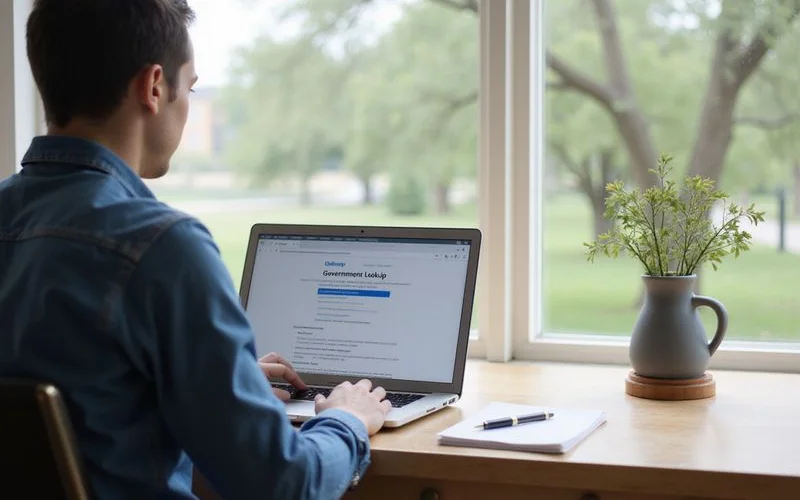
You can check a Texas real estate license for free in four steps. Texas real estate agents are licensed by the Texas Real Estate Commission (TREC). Every licensed agent works under a sponsoring broker, and Texas advertising rules require ads to name that broker.
- Go to the TREC license holder search.
- Search the person’s full name.
- Confirm the license is active.
- Confirm the sponsoring broker matches what they told you.
An ad with no broker name is a problem on its own. If the person won’t tell you who their broker is, treat that as your answer.
Marlene Quade is a licensed Texas real estate agent with Spirit Real Estate Group, LLC. Every page on this site names the broker, and our footer links to the TREC Information About Brokerage Services and Consumer Protection Notice. You can read more about Marlene Quade.
How a real locator gets paid
A licensed apartment locator in Texas is paid by the apartment community, after a lease is signed. That is why the service is free to renters. You pay only the community’s own fees, and you pay them to the community, through its own application, not to the locator.
| Who | Pays whom | When |
|---|---|---|
| Apartment community | The locator | After the lease is signed |
| You | The community | Through the community’s own application or office |
| You | The locator | Never |
If someone acting as a locator asks you to send them an application fee, a holding fee, or a deposit, ask why. A community’s fee goes to the community.

Before you pay any fee
Ask three questions before any money leaves your account:
- Who am I paying? It should be the community or its property manager, through its own portal or office.
- What is this fee, and is it refundable? In Texas, an application fee is non-refundable, while an application deposit is refunded if you are rejected. Our guide on application fees vs. application deposits covers the rules.
- Have I seen the written selection criteria? Texas landlords must give them with the application under Texas Property Code 92.3515.
That third question protects your money. The criteria must spell out the grounds for denial, including credit history, rental history, current income, and criminal history. Under Property Code 92.351, a landlord who rejects you without having made that notice available must return your application fee and any application deposit.
If you already paid
Act the same day, because a payment is easiest to stop in the first hours. Start with these three steps:
- Contact your bank, card issuer, or payment app and ask to stop or reverse the payment.
- Report it to the FTC at ReportFraud.ftc.gov.
- Save every message, listing screenshot, and receipt.
Then start again with someone you can verify. Rental scams that target renters with bad credit work because they feel like the only open door, but real doors exist.
If you want to know what a legitimate first conversation looks like, read what we ask on your first call. Or text (512) 947-2983 with your move-in date and budget. We will tell you which communities fit before you pay a single application fee.
Each community makes its own approval decision. We send you only to the ones whose written policies fit your situation.